pfSense vs OPNsense in 2026: What Actually Matters for Homelabs
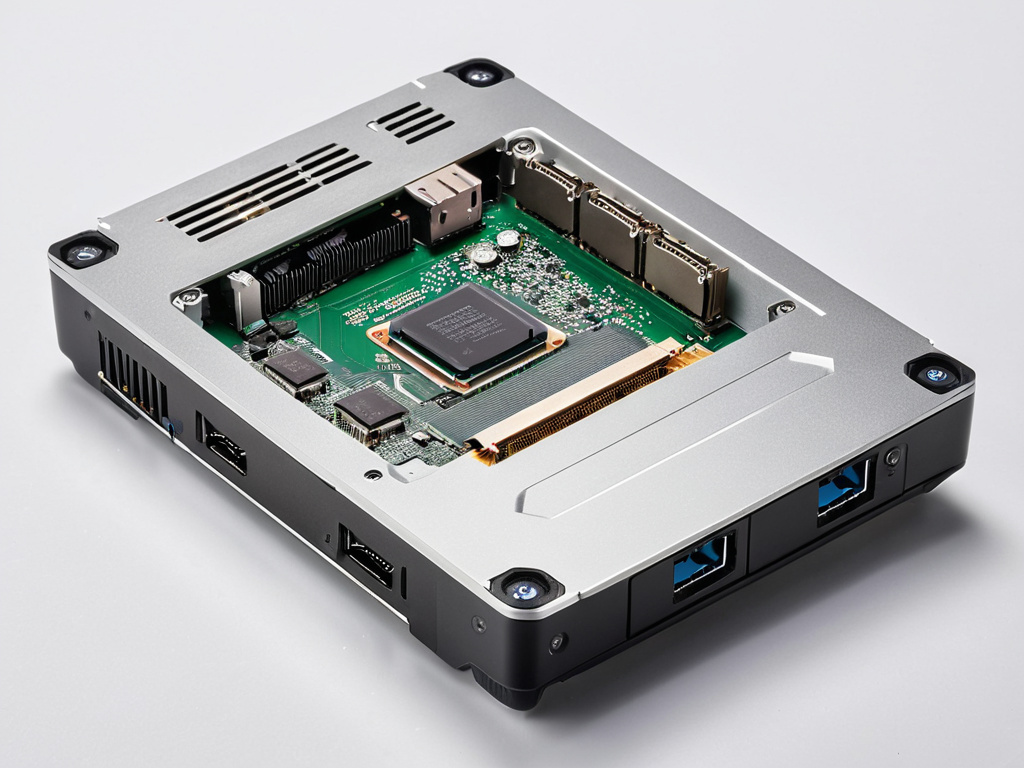
The box at the head of my rack was sold to me under both names. The AliExpress listing calls it a "pfSense Firewall Soft Router" and tags OPNsense in the same title, because these Topton mini-PCs are firmware-agnostic marketing: same board, same ports, whatever you flash is what it becomes. Mine runs OPNsense, on NBN, doing a specific job — carrying the WAN, splitting my VLANs, serving DHCP, and holding a WireGuard tunnel for when I'm away from home. Lately it's also been my test bench for Zenarmor.
Ask anyone "pfSense or OPNsense?" and you'll get a feature list. That's the wrong layer. Once your box has to do a known job, the question shrinks to three things that actually decide it.
Your port count is the first decision, and it's not a firmware question
My gateway is a Topton fanless mini-PC: Intel N150, four Intel i226-V 2.5GbE ports, 16 GB of DDR5, a 256 GB NVMe drive, AES-NI on the CPU. Neither pfSense nor OPNsense requires any of that — both run on far less. But the shape of the box decides your topology before you pick a logo:
- Four LAN ports means I can put each VLAN on its own physical port instead of trunking through a managed switch. Same result under either firmware; the decision was made by the hardware, not the menu.
- AES-NI means WireGuard's crypto is hardware-accelerated, so the tunnel doesn't sit on the CPU at my connection speeds. Both firewalls get that for free on this silicon.
- Fanless means it idles in the rack next to the UPS without a fan to fail. A gateway you don't have to listen to is a gateway you leave running.
Buy the box that fits your port count and power budget, flash whichever firmware you're more comfortable with, and stop re-reading comparison threads. At this price point the "wrong" choice is an afternoon of reinstalling, not a loss.

The package you actually want is the second — and it already picked for me
Here's the part no comparison write-up ever asks: which third-party package are you going to run, and does it exist on both sides?
For my rack, the answer arrived quietly. I've been testing Zenarmor — the IPS and next-gen firewall package in OPNsense's ecosystem — and there is no pfSense equivalent I'd be migrating to. The day I decided to trial it, the "vs" resolved itself: I wasn't choosing between two equal firewalls, I was choosing between a firewall with the inspection layer I wanted and one without.
None of that makes pfSense wrong for you. If your list is routing, NAT, WireGuard and DHCP — which is most homelabs — both do the job correctly and the difference is mostly where things live in the menu. OPNsense's documented REST API is nicer to script against when you want to pull firewall state into a logging stack; mine ends up in Graylog so that a broken rule is a timeline I can read, not a guess. pfSense's automation story has historically been XML-RPC and shell scripts, which works but reads like 2010 — and its longer history means a deeper archive of forum answers when you hit an edge case at 2 a.m.
If you're already running one of them and it works, keep running it. Migration between the two means re-entering interfaces, NAT rules, firewall rules and DHCP scopes by hand; there is no clean import either way. That evening is better spent on the habits below.
The third thing that matters: the habits that outlive the firmware
A gateway's brand does not determine whether your network survives a bad night. Three practices do, and they're identical under both:
Config backup, off-box. A gateway with a lost config is a paperweight. Export the config regularly and keep a copy somewhere that isn't on the same power strip as the box — another machine, an object store, anywhere that survives whatever takes the rack.
Logs going somewhere you'll actually read them. Local log files rot and roll over. Mine ship to Graylog, so when something breaks I can see what changed and when instead of reconstructing it from memory. The firewall's brand is irrelevant to this; the habit is not optional.
Verify the image before you flash it. Download the firmware, run sha256sum on the image file, and compare the result against the hash published on the vendor's download page. If they don't match, stop — don't trust the download button; trust the hash. A corrupted or tampered gateway image is the one failure mode where "it was probably fine" is not a strategy.
So which one, in one paragraph
For a new homelab in 2026: either one, on hardware that fits — and if you want an IPS layer with real momentum in the community, Zenarmor tilts the decision toward OPNsense, exactly as it did for me. If your whole world is routing, NAT and a VPN, pick whichever you can find the best documentation for and stay there; both are FreeBSD-based, both are free, and both will run your network for years without complaining. The comparison threads keep circling because they're comparing the wrong layer. Your port count, your package list and your backup habits are the real spec sheet — write those down first, and the firmware picks itself.
If you're on the tunnel side of this, my Private Internet Access setup guide covers the verification-first way to add a commercial VPN to the same box.
If this was useful, Join the newsletter. No pressure — read it whenever it's useful.
